
By Jaden Jurvakainen · Updated October 2026
What Should You Know Before Buying an Outdoor Sauna?
The short answer: Make six decisions, in this order: who will use the sauna, wood-fired or electric heat, the layout, where it sits in the yard, what your city or county requires, and the budget. Each answer narrows the next one. Typical projects for our 6x8 Kota run $20,000 to $30,000.
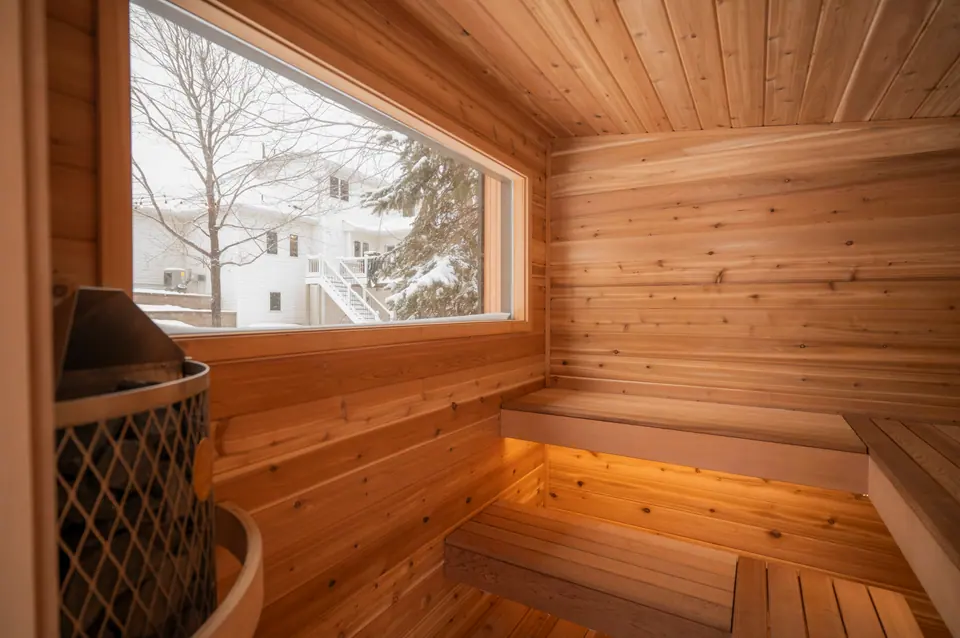
Most of the choices in a sauna purchase depend on each other. The heater you pick changes the electrical work. The layout changes the footprint, and the footprint changes the pad and the permit conversation. So the order you decide things in matters.
This is the order we walk customers through, with the reason behind each step.
1. Decide who will use it
Size comes first because everything else hangs on it. Count the people who will sit in the sauna on a normal night, then the number on a busy one.
Our standard models cover three sizes:
- Kota: 6x8, seats 4 to 6 bathers. A dedicated hot room that fits a small yard.
- Tuli: 8x12, seats 6 to 8. This is our most popular model.
- Superior: 8x16, seats 8 or more. The largest standard model, sized for hosting.
Two things pull in opposite directions here. People who sauna daily tend to like extra bench space, and many homeowners end up wishing they had built a little larger once the sauna becomes a habit. On the other side, a larger room takes longer to heat and may need a bigger heater.
Bench room matters as much as the headcount. In Chanhassen we built a 7x10 hot room for a family who wanted space to stretch out instead of sitting shoulder to shoulder.
2. Choose the heat: wood-fired or electric
Heat is the second decision because it sets what your site needs.
Electric is the easier one to live with. You set the temperature and walk away. It needs a 240V circuit, typically 30 to 60 amps depending on the heater size, with outdoor-rated wiring installed by a licensed electrician. Our builds in Chanhassen and Mound pair an IKI Pillar electric heater with WiFi controls, so the room can be heating before anyone walks outside.
Wood-fired gives you the traditional Finnish experience and needs no electrical service for heat. It asks more of you in return: a wood supply, proper chimney clearances and attention to ventilation. It suits rural properties and people who like tending a fire.
Even with a wood stove, you may still want power at the sauna for lights inside and out, or an outlet.
We compare the two in detail in our post on wood-fired vs. electric sauna stoves.
3. Settle the layout
With size and heat chosen, decide what the building includes besides the hot room.
A changing room gives you a place to hang clothes and cool down out of the wind. Our 8x14 build in Ham Lake is split into two zones, with a dedicated changing room that leads into a hot room heated by an IKI Mini Wood stove. An 8x16 we built in Monticello has a dressing room for the same reason: nobody has to change in the steam room.
A covered porch does a similar job outdoors. The Tuli we built for a client in Wausau, Wisconsin has one for cooling down between rounds.
Windows are the other layout question. Larger glass brings in daylight and a view, and it should be planned together with the benches. On a lake build near Gordon, Wisconsin, we set the window and the upper bench as a pair so the top seats look straight out at the water.
4. Pick the spot and prepare the base
An outdoor sauna needs a stable, level base that drains well. The common options:
- Gravel pad (the most popular choice)
- Concrete pavers
- A small concrete slab
- A deck platform, when it is engineered for the weight
A good base protects the building from moisture problems and shifting. Most of our customers finish their base in a single weekend, and we provide a foundation guide for every model.
Our saunas are built in our shop and arrive finished. That means the route from the street to the pad matters as much as the pad itself. Walk it before you settle on a location and look for narrow gates, slopes and tight turns.
Think about what will sit next to the sauna, too. The Monticello homeowner extended the deck off the front of the building to make room for a cold plunge and an outdoor shower. That kind of addition is easier to plan before the pad goes in.
Three things should be done before delivery day:
- The foundation is complete.
- Electrical work is finished, if the sauna needs it.
- The delivery path is clear and accessible.
With those in place, most customers use their sauna the day it arrives, once the heater is connected.
5. Ask your city or county about permits
Permit rules differ from one city or county to the next, so make this call before the design is final. Depending on where you live, a sauna project can involve:
- An electrical permit for the heater circuit or lighting
- A building permit, which often depends on the size of the structure
- A mechanical permit for a stove or venting, in some places
- Zoning review if the sauna sits near a property line or an easement
Your local building office decides what applies to your lot. We help customers understand what their city typically asks for and how to approach the process.
6. Set the budget with everything in it
Budget comes last because now you know what you are pricing. Our current typical project ranges:
- Kota (6x8): typically $20,000 to $30,000
- Tuli (8x12): typically $30,000 to $40,000
- Superior (8x16): typically $50,000 to $60,000 and up
- Fully custom builds: $35,000 to $65,000 and up
Size, materials, heater type and custom features such as extra windows or a changing room all move the number. Add delivery, site prep and any electrical work to the total so the figure you plan around is the real one. Our post on what an outdoor sauna costs in Minnesota goes through each of those in more detail.
What to check in any sauna you consider
Sizes and prices are easy to compare. Build quality takes a closer look. A well-built sauna has:
- Proper insulation. It prevents heat loss and makes the heater’s job easier.
- A cedar interior. Cedar resists moisture and stays comfortable to the touch. Ours is cedar on the walls, ceiling and benches.
- Tight construction and a vapor barrier. These keep heat and moisture where they belong.
- A heater sized to the room. The right size heats the room quickly without wasting energy.
- Planned ventilation. Good airflow keeps the air fresh and helps the room dry out after use.
Questions to ask any builder
Bring this list to every builder you talk to, including us:
- What materials do you use for the interior and the exterior?
- Is the sauna insulated for Minnesota winters?
- Do you use a vapor barrier and proper framing?
- Is delivery included, and what do I need to have ready?
- What warranty do you provide?
- Do you offer both electric and wood-fired?
A good builder answers these easily.
Sit in one before you decide
Reading about bench space and heat only gets you so far. A Northern Steam Tuli with an IKI electric heater is the sauna at Nordic Escape in St. Michael. Nordic Escape is a separate business, and you can book a session there to feel the size of our most popular model and the heat from an IKI stove before you commit to anything.
If you are working through this list for your own property, tell us about your yard: where the sauna might sit, how a delivery would reach that spot, and who will be using it. We can help you sort out the rest from there.
Related questions
Quick answers
What size outdoor sauna do I need?
Size it for the people who will use it on a normal night, then leave a little room. Our 6x8 Kota seats 4 to 6 bathers, the 8x12 Tuli seats 6 to 8, and the 8x16 Superior seats 8 or more. People who sauna daily usually like extra bench space, and a bigger room takes longer to heat.
Do I need a permit for an outdoor sauna?
Often, yes. Requirements vary by city and county. An electric sauna commonly needs an electrical permit, and some places also require a building permit or a zoning review for a new structure. Call your local building office before the design is final. We help customers understand what their city typically asks for.
What kind of foundation does an outdoor sauna need?
A stable, level base that drains well. A gravel pad is the most popular choice among our customers. Concrete pavers, a small slab, or a deck platform engineered for the weight also work. Most of our customers finish the base in a single weekend, and we provide a foundation guide for every model.
How long does it take to install an outdoor sauna?
Our saunas arrive fully built, so there is no assembly in your yard. Once the foundation is complete, any electrical work is done and the delivery path is clear, most customers use their sauna the same day it is delivered, as soon as the heater is connected.
How much does a fully built outdoor sauna cost?
Typical projects run $20,000 to $30,000 for the Kota (6x8), $30,000 to $40,000 for the Tuli (8x12) and $50,000 to $60,000 and up for the Superior (8x16). Fully custom builds run $35,000 to $65,000 and up. Layout, heater, windows, finishes, site prep, electrical and delivery move the price.