
By Jaden Jurvakainen · Updated October 2026
How Much Does an Outdoor Sauna Cost in Minnesota?
The short answer: Typical projects for our fully built outdoor saunas run $20,000 to $30,000 for the 6x8 Kota, $30,000 to $40,000 for the 8x12 Tuli and $50,000 to $60,000 and up for the 8x16 Superior. Fully custom builds run $35,000 to $65,000 and up. DIY kits and prefab units typically cost $4,500 to $15,000, but they are a different product from a sauna built for Minnesota winters.
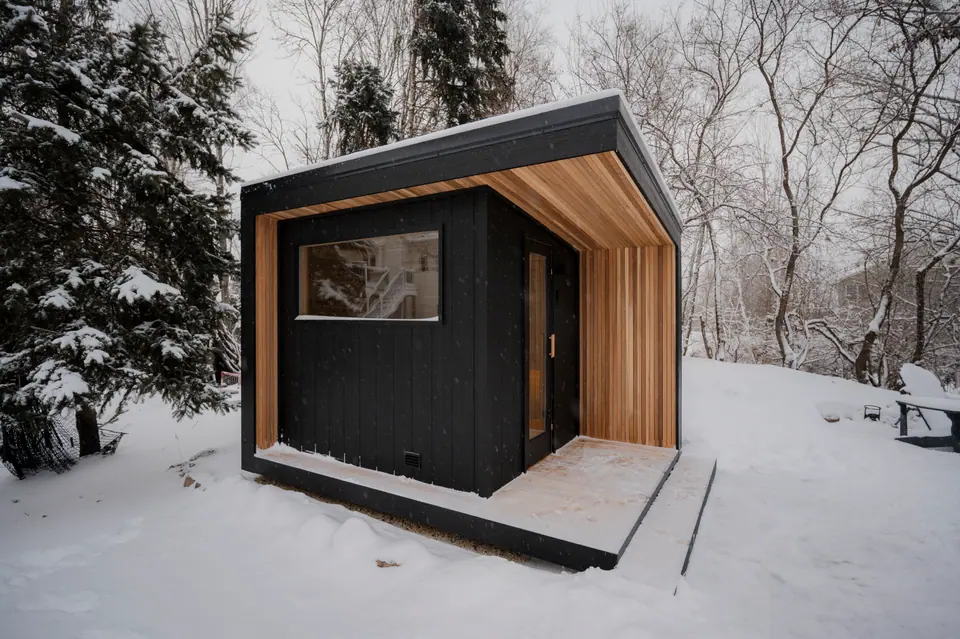
Cost is usually the first question we hear, and the honest answer is a range. Price depends on size, materials, the heater, and how much of the building is custom. It also depends on what you are comparing: a mass-produced kit and a sauna built by hand for Minnesota winters are priced differently because they are different things.
Here are our current prices, the market context around them, and the choices that move the number.
Current Northern Steam pricing
| Model | Size | Typical capacity | Typical project |
|---|---|---|---|
| Kota | 6x8 | 4 to 6 | $20,000 to $30,000 |
| Tuli (most versatile) | 8x12 | 6 to 8 or more | $30,000 to $40,000 |
| Superior | 8x16 | 8 or more | $50,000 to $60,000 and up |
| Custom | Built to your plan | Varies | $35,000 to $65,000 and up |
These are typical project ranges for saunas built by our own crew. Your quote depends on the choices covered below. Our pricing page keeps the current figures.
Where kits and prefab units fit
You will see much lower numbers online. Typical market ranges look like this:
- DIY sauna kits: $4,500 to $9,000
- Mid-range prefab units: $8,000 to $15,000
Those prices are real, and a kit can make sense for some buyers. Know what the gap reflects before you compare. A kit needs assembly and more site prep on your end, and it takes some construction skill. Lower-cost units often use thin materials or cheaper softwoods such as hemlock. In deep winter that shows up as a room that struggles to hold heat.
Minnesota’s climate is a large part of the price of a sauna built here. Year-round comfort in subzero temperatures takes proper insulation, quality materials and a stove that performs in extreme cold.
What moves the price
Size and layout
A 6x8 works well for two people. An 8x12 seats six to eight. As the footprint grows, so does nearly everything in the building:
- Framing material
- Siding and exterior finish
- Insulation
- Bench layout
- Stove size
Layout counts as much as square footage. Our 8x14 in Ham Lake is split into two zones, with a dedicated changing room ahead of the hot room. An 8x16 we built in Monticello includes a dressing room. Extra rooms add walls, doors and finish work.
Heater type
Electric and wood-fired stoves fall in similar price ranges. The installation is what differs.
- Wood-fired: no electrical hookup needed for heat, but the stove needs a chimney.
- Electric: needs a 240V electrical line, and gives you push-button convenience.
The totals usually end up close, so choose based on the heat you want. Our post on wood-fired vs. electric sauna stoves covers how the two feel and what each one asks of your site.
Materials and build quality
This is the biggest driver of both price and how long the sauna lasts. What you are paying for in a well-built sauna:
- Cedar tongue-and-groove interior, which is stable and durable
- Proper vapor barriers
- High-performance insulation
- Durable siding, such as LP SmartSide, metal or cedar
- Benches built for comfort
Exterior choices can move a build into custom territory. A sauna we built in Becker is clad in shou sugi ban. A Superior near Gordon, Wisconsin has a covered entry with a cedar ceiling and recessed lighting.
Windows and doors
Glass adds cost and changes how the room holds heat.
- Tempered glass is standard for safety.
- Larger windows bring in more natural light.
- Full-glass fronts and panoramic windows change both the price and the heat retention.
Many of our builds have a large picture window and a full-glass door. If you want more glass than a standard model carries, a custom build gives you room to design it.
Porches and outdoor space
A covered porch gives you a place to cool down between rounds, and it is more building to frame and finish. A wood-fired sauna we built in Longville has a roomy dressing room and an oversized porch along with large windows facing the lake. Features like these add to the price, and enough of them make the build a custom one.
Costs outside the sauna itself
Many first-time buyers overlook these:
- Foundation or pad. Gravel, concrete or pavers. The sauna needs a level base before delivery.
- Electrical work. An electric heater needs a 240V line, and reaching the sauna can mean trenching.
- Delivery. We deliver our saunas fully built, so site access matters. Tight spaces, slopes, long driveways and narrow gates all affect the plan. Delivery distance does too.
- Replacement. A low-cost kit may need parts or replacing far sooner than a well-built sauna. Count that when you compare prices.
We help with site planning and coordinate with electricians and other trades, so these items get sorted out early instead of surfacing on delivery day.
When you already have a structure
A new building is not always the answer. Around Clearwater Lake we turned an old storage shed into a sauna with a new cedar interior and an IKI wood heater. At another lakeside property we gutted an existing sauna to the framing and rebuilt it with new insulation, cedar and a larger window package, all in the same footprint.
Projects like these are quoted one at a time, because the condition of the existing structure decides the scope.
What the price buys
A sauna built by hand for Minnesota weather includes:
- A cedar tongue-and-groove interior
- Insulation and vapor barriers suited to the climate
- A quality stove matched to the room
- Comfortable, well-planned benches
- Exterior siding meant to last
- Reliable heat retention in deep winter
The value shows up in how often the sauna gets used. The Tuli is our most popular model because it works for one person on a weeknight and for a group on the weekend.
If you want to feel one before you spend anything, a Northern Steam Tuli with an IKI electric heater is the sauna at Nordic Escape in St. Michael. Nordic Escape is a separate business, and you can book a session there.
Getting a real number
A typical range is where the conversation begins. To turn it into a quote, we need to know the size you want, the heater, any custom features, and what your site looks like.
Tell us about your yard: where the sauna would sit, how a delivery would reach it, and whether power is nearby. We will give you a quote and point out the site costs to plan for alongside it.
Related questions
Quick answers
How much does a Northern Steam sauna cost?
Typical projects run $20,000 to $30,000 for our 6x8 Kota, $30,000 to $40,000 for the 8x12 Tuli and $50,000 to $60,000 and up for the 8x16 Superior. Fully custom builds run $35,000 to $65,000 and up. Your quote depends on the heater, glass, layout, finishes and what your site needs.
Is a wood-fired sauna cheaper than an electric one?
Not by much either way. The stoves fall in similar price ranges. A wood-fired sauna needs a chimney and no electrical hookup for heat, and an electric one needs a 240V line run by an electrician. The totals usually land close together, so we suggest choosing on the heat you want.
Why does a custom sauna cost more than a kit?
You are paying for a finished building made for this climate: cedar tongue-and-groove inside, real insulation and a vapor barrier, durable siding and a properly sized stove, delivered fully built. DIY kits typically run $4,500 to $9,000, but they need assembly and often use thinner materials that hold heat poorly in deep cold.
What costs do people forget when budgeting for a sauna?
Mostly site work. Buyers often overlook the foundation or pad, electrical trenching for an electric heater, and delivery obstacles such as narrow gates or uneven ground. With a low-cost kit, also think about how soon it may need parts or replacing. Ask for these to be covered in any quote you compare.
What adds the most to the price of an outdoor sauna?
Size and custom features. A larger footprint means more framing, siding, insulation and benching, and often a larger stove. After that, the big movers are large glass, a changing room or porch, and upgraded exterior materials. Delivery distance and difficult site access can add to the total as well.